On this page
Quick answer
The most often each part can be replaced: nasal cushions or pillows, twice a month; full face cushions, monthly; mask frame and tubing, every 3 months; headgear and water chamber, every 6 months. Filters vary. Replace a part sooner if it’s cracked or torn, or a cushion won’t come clean.
CPAP parts wear out over time and use. Cushions can get stiff, filters can clog with dust, and water chambers can turn cloudy. This guide shows the most often each part can be replaced, the signs a part is worn, and where those schedules come from.
CPAP replacement schedule at a glance
| Part | Most often (Medicare and ResMed schedules) | Signs it’s worn |
|---|---|---|
| Nasal cushion or nasal pillows | Up to 2 a month | Edges stiff, cracked or torn; color change; less comfortable than before |
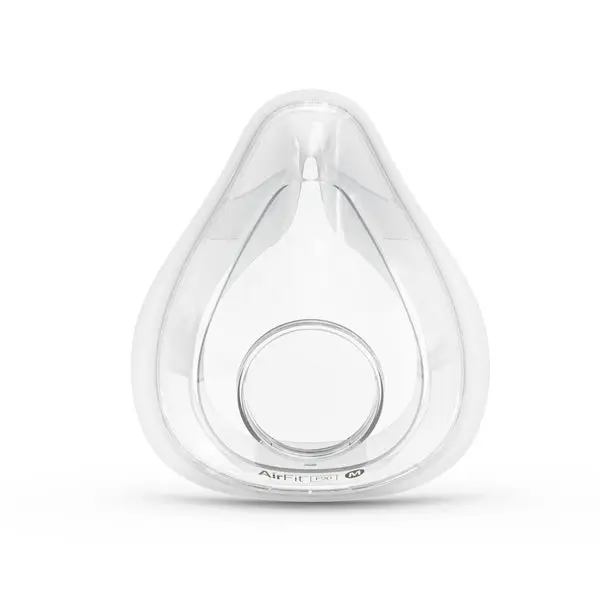
| Full face cushion | Up to 1 a month | Same signs; won’t come fully clean |
| Mask frame (whole mask, not headgear) | Up to 1 every 3 months | Too many leaks; cracks or other visible damage |
| Headgear and chin strap | Up to 1 every 6 months | Straps stretched; you tighten more to stop leaks |
| Disposable machine filter | Up to 2 a month. AirSense 10 and 11 guides: every 6 months, or sooner if it has holes or is blocked | Discolored; holes or tears; blocked with dirt or dust |
| Tubing (standard, SlimLine or heated) | Up to 1 every 3 months | Holes, tears or cracks; tubing looks cloudy |
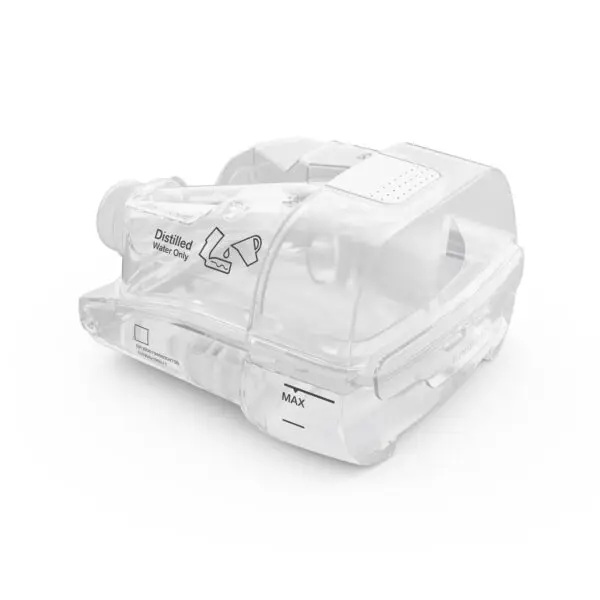
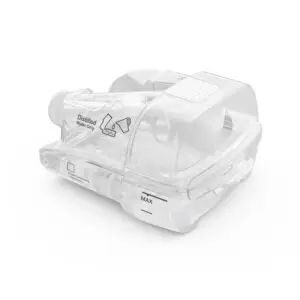
| Water chamber (humidifier tub) | Up to 1 every 6 months | Leaks; cracked, cloudy or pitted; seal cracked or torn |
These numbers come from ResMed’s U.S. replacement schedules and Medicare’s coverage policy (see Sources). They show the most often Medicare usually pays for, or ResMed suggests. They are not a deadline: replace a part sooner if it’s worn.
If you use a ResMed AirMini or a machine with a reusable filter, check that machine’s user guide for its parts. Not sure which machine or mask you have? See How to find your machine and mask model name.
How to check each part
Check your parts regularly, for example when you wash them. Good light helps.
- Cushions and pillows. Check the edge that touches your skin for stiff spots, small tears, cracks or a color change.
- Headgear. Look for straps that have stretched out or feel less elastic. If you now tighten it more to stop leaks, it may be stretched.
- Filter. Hold it next to a new one. Replace it if it looks discolored, has holes or tears, or is blocked with dirt or dust. ResMed says the AirSense filter can’t be washed or reused. Steps: How to change the filter on a ResMed AirSense 10 or 11.
- Tubing. Look along the whole length under a light. Replace it if you see holes, tears or cracks.
- Water chamber. After washing, hold it up to the light. Replace it if it leaks or is cracked, cloudy or pitted, or if its seal is cracked or torn. White powder deposits can be cleaned off. See How to clean your CPAP water chamber.
Why schedules differ (manufacturer vs. insurance)
You may see different numbers for the same part. They answer different questions.
- Your user guide focuses on the part’s condition. ResMed’s AirSense 10 and 11 guides say to replace the air filter every 6 months, or sooner if it has holes or is blocked. They say to replace the tubing if it has holes, tears or cracks. They say to replace the water chamber if it leaks or is cracked, cloudy or pitted.
- Insurance schedules are about how often a plan will usually pay. Medicare’s policy lists “the usual maximum amount of accessories expected to be reasonable and necessary.” For example, up to 2 nasal mask cushions a month, or 1 full face cushion a month. ResMed says its U.S. schedule is based on these Medicare (CMS) guidelines. Other insurers set their own schedules, and they can differ.
- Your home matters, too. ResMed notes that a disposable filter won’t last as long in a dusty or humid room.
So a schedule is a guide, not a rule that a part fails on that day. If insurance pays for your supplies, ask your supplier what your plan covers and when you can order next.
Keep track of it
The hard part is remembering when you last changed each piece. One simple way: when you open a new part, write the date on a strip of tape on its box.
DuradMedical members can use Supply Reminders. You add your machine and mask, enter when you last replaced each part (using your supplier’s schedule), and we email you before each part is due. Then you can order it here, or from your own supplier. See how membership works
When to call your supplier
Call the company that supplied your equipment if:
- Your machine is damaged, makes unusual sounds, or doesn’t work the way it usually does. ResMed’s AirSense 10 and 11 guides say to stop using it and contact your care provider if this happens.
- Your water chamber or its side cover is cracked.
- You’re not sure which cushion size, tubing or chamber fits your machine and mask.
- Leaks or discomfort keep happening, even with new parts. Don’t change your machine’s settings on your own.
- Your mask leaves red marks or sore spots that don’t fade. Ask your supplier about fit, and your doctor about your skin.
- You have questions about what your insurance will pay for.
Parts for this guide
Check the label on your current part, or your user guide, before you order.
-
Mask cushions & pillows ResMed
ResMed AirFit F20 Cushion
$52.99Member price $47.99 How membership works Choose size This product has multiple variants. The options may be chosen on the product page -
Filters ResMed
ResMed AirSense 11 Standard Filters, 24-Pack
$46.99Member price $41.99 How membership works Add to cart -
Water chambers ResMed
ResMed AirSense 11 Water Chamber (HumidAir 11)
$42.99Member price $37.99 How membership works Add to cart
Sources
- ResMed. AirSense 10 User Guide (Americas edition, 3781122). https://document.resmed.com/documents/products/machine/airsense-series/user-guide/3781122_airsense-10_user-guide_amer_multi.pdf
- ResMed. AirSense 11 User Guide (Americas edition, 398291). https://document.resmed.com/documents/products/machine/airsense-11/user-guide/398291_airsense-11_user-guide_amer_multi.pdf
- ResMed. CPAP replacement guidelines (U.S.). https://www.resmed.com/en-us/health-professionals/solutions/resmed-resupply/replacement-guidelines/
- ResMed. CPAP supplies and replacement parts (U.S.). https://www.resmed.com/en-us/products/cpap/replacement-parts/
- ResMed. Cleaning CPAP equipment (U.S.). https://www.resmed.com/en-us/sleep-health/resources/cleaning-cpap-equipment/
- Centers for Medicare & Medicaid Services. LCD L33718: Positive Airway Pressure (PAP) Devices for the Treatment of Obstructive Sleep Apnea (Medicare local coverage policy), revision effective 01/01/2024. https://www.cms.gov/medicare-coverage-database/view/lcd.aspx?lcdId=33718
- Centers for Medicare & Medicaid Services. Policy Article A52467: Positive Airway Pressure (PAP) Devices for the Treatment of Obstructive Sleep Apnea. https://www.cms.gov/medicare-coverage-database/view/article.aspx?articleId=52467